Posted by
Admin
On
3:01:00 PM
“Holmes v. Atlanta: Changing the Game” was curated by a team of HSOC students (HTS majors Anna Arnau, Ericka Brundage, Hayden Gregg, plus doctoral student Renee Shelby) working under direction of Mary McDonald and Jennifer Sterling. The exhibit documents the life of Alfred “Tup” Holmes, a Black golfer whose successful Supreme Court suit compelled integration of the Bobby Jones Golf Course and other public recreational facilities in Atlanta and throughout the U.S.In a matter of roughly ten weeks, the HSOC team pulled together an extensive series of panels that fill the walls of a large reception space at the course’s clubhouse. One highlight for me was a map showing locales where forty-some subsequent civil rights cases were won based on citations to Holmes v. Atlanta.The exhibit will remain on permanent display at the club, so be sure to check it out when you get a chance! Here is an awesome panorama photo taken of the students' careful curation.
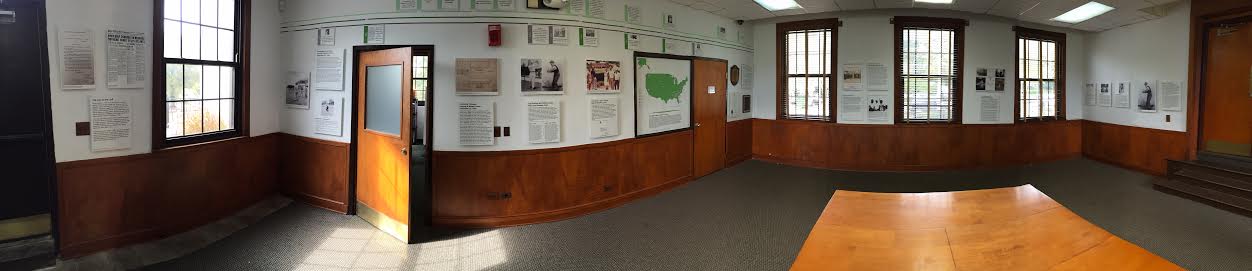

This exhibit feels like more than a historical display—it’s a powerful act of reclaiming narrative and honoring a story that reshaped not just a golf course, but a system. The work done by the HSOC team in such a short time speaks to the dedication behind bringing hidden histories into public view, giving Alfred “Tup” Holmes the recognition his impact deserves.
What makes this especially meaningful is how one individual’s fight for access and dignity created ripples far beyond a single case. The map of subsequent civil rights victories is a reminder that identity, resistance, and courage are never isolated—they build upon each other, shaping the world step by step.
This idea of challenging imposed boundaries and redefining one’s place in society strongly resonates with the themes in *I Feel Like a Woman (إحساسي امرأة) *. Just as Holmes’ story reflects a struggle against exclusion and limitation, the novel explores a deeply personal journey of confronting societal expectations and claiming one’s true identity.
In the end, exhibits like this don’t just preserve history—they invite us to reflect on our own stories, and the ways we continue to shape and challenge the narratives around us.